Read on to learn more about Revit 2026 System Requirements with benchmarks!
As of 2026, Autodesk Revit has undergone a fundamental architectural shift. The introduction of the Accelerated Graphics Tech Preview in Revit 2026 marks the move from a historically CPU-bound graphics pipeline to a modern, GPU-driven Hydra/OpenUSD engine.
For the data-driven BIM manager or hardware enthusiast, choosing a workstation configuration is no longer just about “clock speed.” It’s about balancing single-core throughput for modeling with VRAM bandwidth for the new graphics engine.
Revit 2026 System Requirements
While Autodesk provides “Minimum” specs, those are effectively for viewing files, not creating them. Below is the Real-World Standard for professional AEC production.
| Component | Minimum (Small Models) | Recommended (Standard) | Performance (Large/Complex) |
| CPU | 2.5 GHz+ (8-Core) | 3.5 GHz+ (12-Core) | 4.0 GHz+ (16-Core+) |
| RAM | 16 GB | 32 GB | 64 GB – 128 GB |
| GPU | 4 GB VRAM (DX11) | 8 GB VRAM (RTX/Ada) | 16 GB+ VRAM (Blackwell/W7900) |
| Storage | 30 GB Free (SSD) | 100 GB Free (NVMe Gen4) | 500 GB+ Free (NVMe Gen5) |
CPU Performance: The Single-Core King vs. Multi-Core Muscle
Revit remains primarily a single-threaded application for the “Edit/Modify” cycle (calculating wall joins, regenerating views). However, multi-core performance is now critical for Vector Printing, IFC Exporting, and Background MEP Calculations.
Estimated Revit 2026 Benchmarks: CPU Composite Score
Higher is better.
| Processor Model | Modeling Score | Multi-Thread (Render) | Thermal Efficiency |
| AMD Ryzen 7 9800X3D | 🟢 115 | 🟡 82 | 🟢 High |
| Intel Core Ultra 9 285K | 🟢 112 | 🟢 118 | 🟡 Medium |
| AMD Ryzen 9 9950X | 🟡 108 | 🟢 122 | 🟢 High |
| Intel Core i9-14900K | 🟡 104 | 🟡 110 | 🔴 Low (Hot) |
Data Insight: The Ryzen 7 9800X3D often outperforms the “higher tier” chips in Revit because its massive 3D V-Cache significantly reduces the latency of Revit’s frequent memory-access instructions during modeling.
The 2026 Graphics Revolution
Revit 2026’s Accelerated Graphics (Tech Preview) leverages the GPU to handle geometry rendering via the Hydra framework.
- Impact: Navigation speed (orbit/zoom) is up to 4x–5x faster in 3D views.
- The Catch: It requires more VRAM. If your model exceeds your GPU’s memory, Revit will revert to the old, laggy CPU-bound engine.
- Benchmark Shift: In previous years, a cheap GPU was fine. In 2026, an NVIDIA RTX 5070 or RTX 4000/5000 Blackwell is the new baseline for “smooth” large-scale BIM.
RAM: The “Rule of 20”
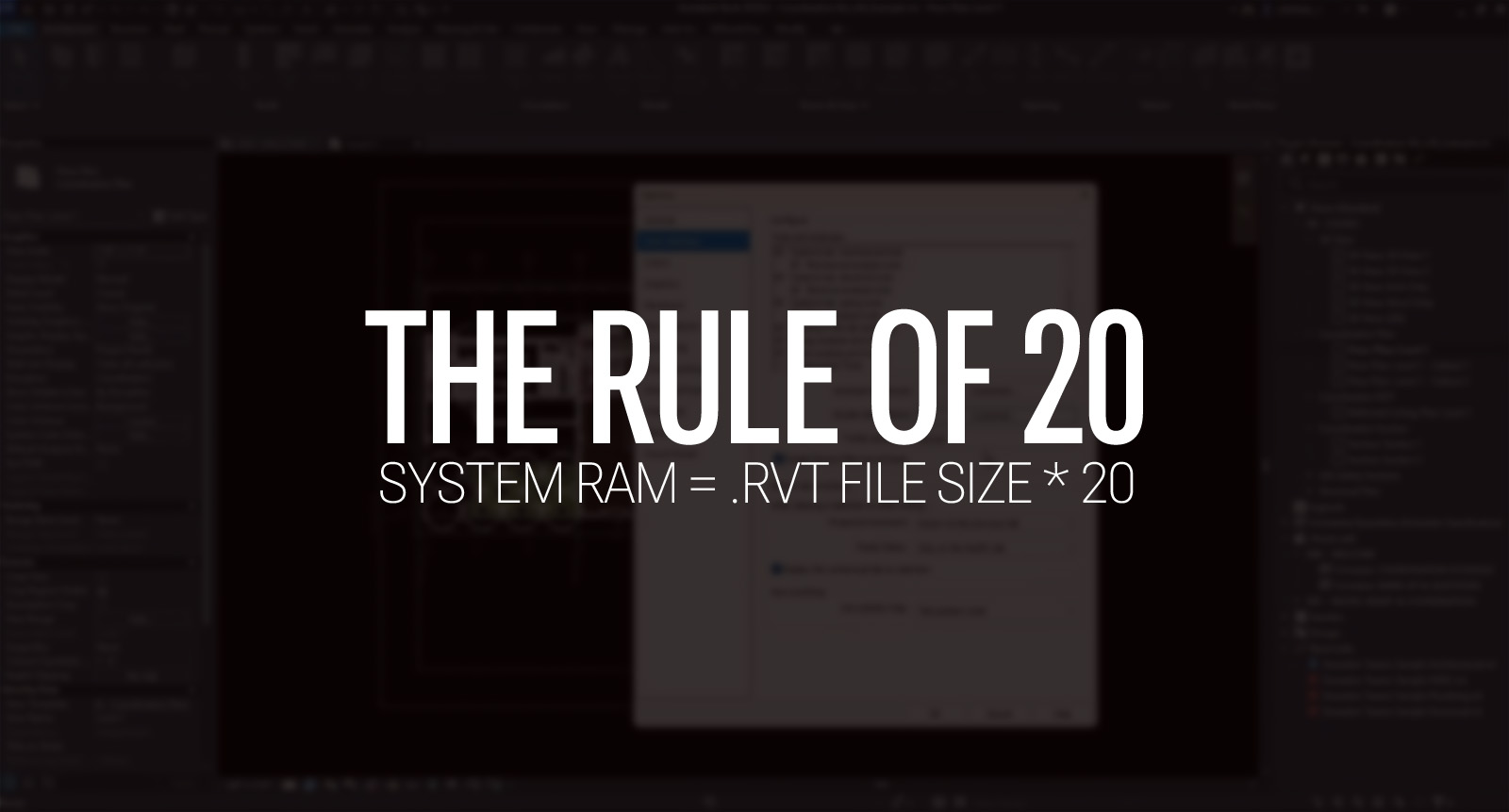
A good heuristic for Revit is the 20x Rule: Your system RAM should be roughly 20 times the size of your .rvt file.
- 500MB Model: 10GB used by Revit + 8GB for OS = 32GB Minimum.
- 1GB+ Model: 20GB+ used by Revit + linked files + browser = 64GB Recommended.
Hardware Buying Guide: 2026 Edition
- For the Pure Modeler: Prioritize the AMD Ryzen 7 9800X3D. The cache is a “cheat code” for Revit responsiveness.
- For the BIM Manager/Heavy Multitasker: Go for the Intel Core Ultra 9 285K. It handles background exports and dozens of open tabs better.
- The GPU Sweet Spot: The NVIDIA RTX 4500 Blackwell (Professional) or RTX 5080 (Consumer) offers enough VRAM (16GB+) to keep the new 2026 engine from crashing on large projects.
Check out our ProMagix HD60 the ultimate Revit Workstation.
For help picking software, try this architecture finance model.

Josh Covington
Latest posts by Josh Covington (see all)
- Catia System Requirements & Empirical Benchmarks - August 4, 2026
- OEM vs Retail Components: Building a More Reliable Desktop - July 21, 2026
- 5 PC Innovations Velocity Micro Helped Pioneer - July 13, 2026
Thanks for breaking down the shift to GPU-driven rendering in Revit 2026— it really highlights how much the software has evolved. The emphasis on VRAM and multi-core performance makes sense now that the graphics pipeline is so different. It’s also helpful to see the real-world benchmarks for modeling vs. rendering performance, especially with the Ryzen 7 9800X3D showing strong single-threaded scores.